about
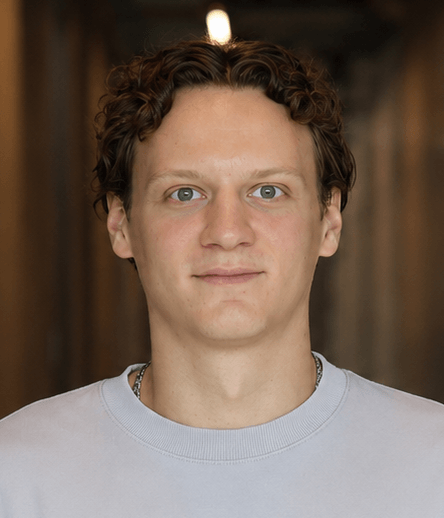
I'm an ELLIS PhD student at IST Austria supervised by Francesco Locatello, co-supervised by Arthur Gretton at the Gatsby Computational Neuroscience Unit, University College London.
My recent work focuses on the identifiability of representations in modern machine learning models, particularly foundation-scale models. I'm motivated by problems in biology that offer the chance to gain insights into the mechanisms of human disease and behaviour, and in medicine with the potential for real-world impact on patient care.
Previously, I was a full-time staff data scientist at the Centre for Data Science and Digital Health (CREATE) at Hamilton Health Sciences in Hamilton, Canada. I completed a Master of Science in Statistics at the Unviersity of Toronto. During my undergraduate studies, I worked in the lab of Anna Goldenberg at The Hospital for Sick Children, also in Toronto. In the past, I've consulted on software engineering, machine learning engineering, and data science projects ranging from back office finance to consumer-facing mobile and web applications.
employment
-
Research Consultant
Chan Zuckerberg Initiative Foundation
March 2025 - June 2025 -
Junior Data Scientist
Centre for Data Science & Digital Health, Hamilton Health Sciences
2019 - 2024
education
-
Doctor of Philosophy, Computer Science
Institute of Science and Technology Austria
2024 - present -
Master of Science, Statistics
University of Toronto
2021 - 2024 -
Honours Bachelor of Science, Bioinformatics and
Computational Biology & Neuroscience
University of Toronto
2015 - 2019
selected publications
-
Toward Identifiable Sparse Autoencoders
ICML, 2026 [arxiv]
Walter Nelson, Theofanis Karaletsos, Francesco Locatello -
Statistical and structural identifiability in representation learning
ICLR, 2026 [arxiv]
Walter Nelson, Marco Fumero, Theofanis Karaletsos, Francesco Locatello -
Detecting irregularities in randomized controlled trials using machine learning
Clinical Trials, 2024 [doi]
Walter Nelson*, Jeremy Petch*, Jonathan Ranisau, Robin Zhao, Kumar Balasubramanian, Shrikant Bangdiwala -
Optimizing warfarin dosing for patients with atrial fibrillation using machine learning
Scientific Reports, 2024 [doi]
Jeremy Petch, Walter Nelson, Mary Wu, Marzyeh Ghassemi, Alexander Benz, Mehdi Fatemi, Shuang Di, Anthony Carnicelli, Christopher Granger, Robert Giugliano, Hwanhee Hong, Manesh Patel, Lars Wallentin, John Eikelboom, Stuart Connolly
open source & side projects
-
SanteMPI Record Linkage Configuration Optimizer
Through our work at CREATE, I engineered a plugin for optimizing the parameters of the SanteMPI patient record linkage algorithm using Bayesian optimization. Sante software underpins national deployments in Tanzania and Myanmar. -
Compare Concordance
I authored a Python port of the compareC R library for doing statistical inference about correlated right-censored c-indices, which commonly arise in the comparison of predictive survival models. The package is available on PyPi.
research
Now
I study when the internal representations of machine learning models are uniquely identifiable from the data. Our first paper defines statistical and structural identifiability, distinguishing this uniqueness from recovery of the underlying data-generating process, with an application to separating batch effects from biological signal in an image foundation model [1]. Our second applies this theory to sparse autoencoders (SAEs), identifying architectural changes that improve their identifiability [2]. Our third bridges geometry and architecture to bring identifiability to attention mechanisms in LLMs, with applications to KV cache eviction [19].
Biology
- I've worked on more robust estimates of mitochondrial DNA copy number and on extracting features from retinal images for Mendelian randomization studies of dementia and cardiometabolic disease [4], [5].
- We've compared graph learning methods for biological tasks [3] and used GPU acceleration to scale statistical methods to biobank datasets [6].
Health
My earlier work centred on clinical machine learning. A recurring conviction: clinical utility needs robust, prospective evaluation [7], [8], [9].
- With clinicians, I've worked on cancer recurrence prediction, signs of cardiometabolic disease, and reinforcement learning for warfarin dosing [10], [11], [14], [15].
- I've developed methods for patient record linkage and contributed to software for deidentifying clinical notes [12], [13].
- In clinical trial anomaly detection, we found that sophisticated methods did not significantly outperform simple alternatives on real data [16], [17], [18].
References
- W. Nelson, M. Fumero, T. Karaletsos, F. Locatello. "Statistical and structural identifiability in representation learning." ICLR, 2026.
- W. Nelson, T. Karaletsos, F. Locatello. "Toward Identifiable Sparse Autoencoders." ICML, 2026.
- W. Nelson, M. Zitnik, B. Wang, J. Leskovec, A. Goldenberg, R. Sharan. "To embed or not: network embedding as a paradigm in computational biology." Frontiers in Genetics, 10, 381, 2019.
- M. Chong, P. Mohammadi-Shemirani, N. Perrot, W. Nelson, R. Morton, et al. "GWAS and ExWAS of blood Mitochondrial DNA copy number identifies 71 loci and highlights a potential causal role in dementia." eLife, 11, e70382, 2022.
- A. Villaplana-Velasco, N. Perrot, Y. Hang, M. Chong, E. Trucco, et al. "Mendelian randomization study implicates inflammaging biomarkers in retinal vasculature, cardiovascular diseases, and longevity." Science Advances, 11(43), eadu1985, 2025.
- M. Di Scipio, M. Khan, S. Mao, M. Chong, C. Judge, N. Pathan, N. Perrot, et al. "A versatile, fast and unbiased method for estimation of gene-by-environment interaction effects on biobank-scale datasets." Nature Communications, 14(1), 5196, 2023.
- J. Petch, J. P. T. Bortesi, W. Nelson, S. Di, M. H. Mamdani. "Should I trust this model? Explainability and the black box of artificial intelligence in medicine." Artificial Intelligence for Medicine, 265–273, 2024.
- J. Petch, S. Di, W. Nelson. "Opening the black box: the promise and limitations of explainable machine learning in cardiology." Canadian Journal of Cardiology, 38(2), 204–213, 2022.
- S. Muralitharan, W. Nelson, S. Di, M. McGillion, P. J. Devereaux, N. G. Barr, et al. "Machine Learning–Based Early Warning Systems for Clinical Deterioration: Systematic Scoping Review." Journal of Medical Internet Research, 23(2), e25187, 2021.
- T. Ivanics, W. Nelson, M. S. Patel, M. P. A. W. Claasen, L. Lau, A. Gorgen, P. Abreu, et al. "The Toronto Postliver Transplantation Hepatocellular Carcinoma Recurrence Calculator: A Machine Learning Approach." Liver Transplantation, 28(4), 593–602, 2022.
- R. Shah, J. Petch, W. Nelson, K. Roth, M. D. Noseworthy, M. Ghassemi, et al. "Nailfold capillaroscopy and deep learning in diabetes." Journal of Diabetes, 15(2), 145–151, 2023.
- W. Nelson, N. Khanna, M. Ibrahim, J. Fyfe, M. Geiger, K. Edwards, J. Petch. "Optimizing Patient Record Linkage in a Master Patient Index Using Machine Learning: Algorithm Development and Validation." JMIR Formative Research, 7, e44331, 2023.
- C. Moore, J. Ranisau, W. Nelson, J. Petch, A. Johnson. "Pyclipse, a library for deidentification of free-text clinical notes." arXiv:2311.02748, 2023.
- J. Petch, W. Nelson, M. Wu, M. Ghassemi, A. Benz, M. Fatemi, S. Di, et al. "Optimizing warfarin dosing for patients with atrial fibrillation using machine learning." Scientific Reports, 14(1), 4516, 2024.
- M. Fatemi, M. Wu, J. Petch, W. Nelson, S. J. Connolly, A. Benz, A. Carnicelli, et al. "Semi-Markov Offline Reinforcement Learning for Healthcare." Conference on Health, Inference, and Learning (CHIL), 119–137, 2022.
- W. Nelson, J. Petch, J. Ranisau, R. Zhao, K. Balasubramanian, et al. "Detecting irregularities in randomized controlled trials using machine learning." Clinical Trials, 17407745241297947, 2024.
- W. Nelson, J. Ranisau, J. Petch. "Do Ensembling and Meta-Learning Improve Outlier Detection in Randomized Controlled Trials?" Machine Learning for Health (ML4H), 2023.
- J. Petch, W. Nelson, S. Di, K. Balasubramanian, S. Yusuf, P. J. Devereaux, et al. "Machine learning for detecting centre-level irregularities in randomized controlled trials: A pilot study." Contemporary Clinical Trials, 122, 106963, 2022.
- Paper on identifiability in attention mechanisms and KV cache eviction. Link forthcoming.